Gathering to Remember: How Families Are Reimagining the Traditional Funeral Reception

Rivera Family Funerals & Cremations Staff • November 4, 2026

After a funeral or memorial service, many families find themselves uncertain about what comes next. There is a long tradition of gathering together — sharing a meal, telling stories, sitting quietly with people who also loved the person who has died. In Northern New Mexico, that tradition runs especially deep, shaped by generations of community ties, family pride, and the enduring belief that no one should grieve alone.

Today, families are approaching that post-service gathering with more intention than ever before. Whether the gathering is held at a family home, a church hall, a community center, or another meaningful space, the spirit behind it remains the same: to honor a life and hold one another up in the days immediately after loss.

What a Reception Can Look Like

There is no single right way to gather after a service. Some families host an informal meal at home, where neighbors arrive with covered dishes and children run through familiar rooms. Others choose a more structured reception at a separate venue, with photographs displayed, music playing softly, and a few people prepared to share memories. Still others keep it small and quiet — just immediate family, an afternoon, a pot of coffee.

All of these are valid. The gathering is not about following a formula. It is about creating a moment where the people who loved someone can breathe together and feel less alone.

Blending Tradition with Personal Meaning

Across Northern New Mexico, families have long woven local customs into the fabric of how they mourn and celebrate. Food is almost always at the center — recipes passed down through families, dishes that carry the flavor of a particular kitchen or a particular woman's hands. A reception table set with those foods becomes its own kind of tribute.

Families are also finding thoughtful ways to personalize the gathering beyond the menu:

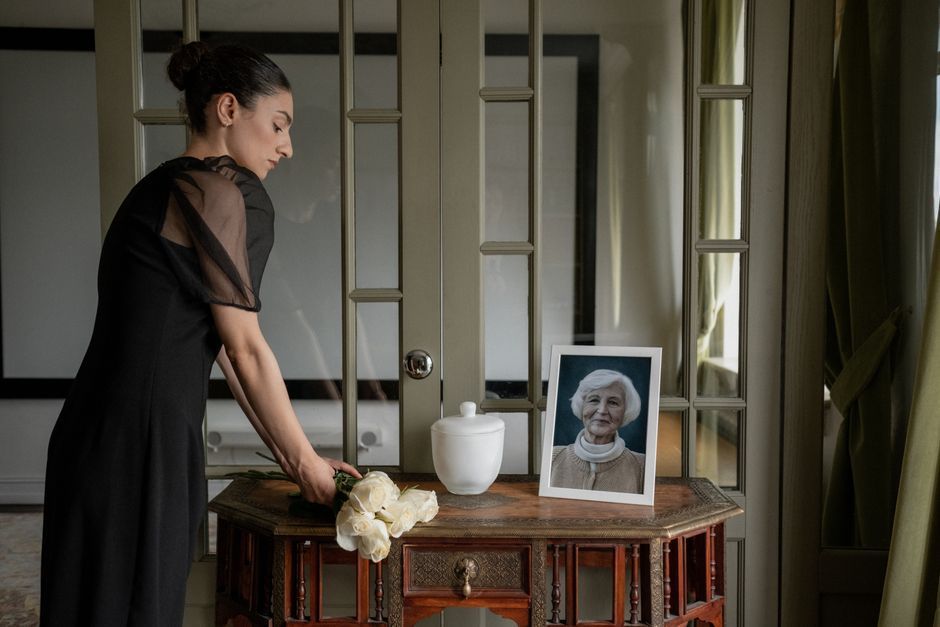
  • Memory tables: A quiet corner set with photographs, a meaningful object or two, and perhaps a small candle invites guests to pause and remember without feeling prompted to speak.
  • Music that mattered: A playlist built from the songs a person loved — whether that is traditional New Mexican music, country, classical, or something entirely unexpected — fills a room with the texture of who they were.
  • Handwritten cards or a memory book: Guests can be invited to write a line or two about the person who has died, giving families something to return to in quieter weeks ahead.
  • A moment of intention: Some families open the reception with a brief prayer, a favorite poem read aloud, or simply a few words of welcome that acknowledge why everyone is there. This can ease the transition from the formality of the service into the warmth of the gathering.

Thinking About the Practical Details

Planning a reception while also managing grief is genuinely hard work. It helps to ask for help early, and most communities — particularly in close-knit areas of Northern New Mexico — will offer it readily. A neighbor who wants to bring food, a cousin who can set up chairs, a friend who is good at logistics: these offers are real gifts, and accepting them honors the people making them as much as it eases your burden.

A few practical questions worth thinking through, at whatever pace feels right:

  • Where will the gathering be held, and how many people might attend?
  • Will you provide food, ask guests to bring dishes, or arrange catering?
  • Are there guests with mobility needs or young children whose comfort matters?
  • Is there someone who can serve as a quiet host — welcoming people, refilling glasses, noticing if someone is struggling?

None of these questions need answers all at once. A trusted funeral professional can often help families think through the sequence of decisions, so nothing feels overwhelming in the moment.

The Gathering Is Part of the Farewell

It can be tempting to think of the reception as a formality — something to get through after the harder, more official moments of the day. But many families find that the gathering is where the most genuine mourning and the most genuine comfort happen side by side. Someone tells a story no one else had heard. Two cousins who rarely see each other spend an hour remembering together. A grandchild falls asleep in an armchair surrounded by the sound of adults talking about someone they loved.

The gathering does not have to be perfect to be meaningful. It simply has to be honest — a room where people are allowed to feel what they feel, and where the person who has died is present in every conversation.

At Rivera Family Funerals & Cremations, we have been privileged to walk alongside Northern New Mexico families through these moments for generations. We understand that every family's way of gathering is its own, and we are here to support whatever shape that takes — with care, without pressure, and with deep respect for the communities we are honored to serve.

Photo by Thomas Benedetti on Pexels.
By Rivera Family Funerals & Cremations Staff • October 28, 2026
Gentle, age-appropriate ways to include children in memorial services, with ideas for extended-family traditions that support grieving kids together.
By Rivera Family Funerals & Cremations Staff • October 21, 2026
A plain-language guide to burial options — ground burial, cremation, mausoleums, and more — grounded in Northern New Mexico's diverse traditions.
By Rivera Family Funerals & Cremations Staff • October 14, 2026
Thoughtful ideas for personalizing a memorial service — from cultural traditions and family keepsakes to community gatherings — for Northern New Mexico families
By Rivera Family Funerals & Cremations Staff • October 7, 2026
Not sure what to do with your loved one's cremated remains? Explore your options — from home keeping to burial — with no pressure and no rush.
By Rivera Family Funerals & Cremations Staff • September 30, 2026
Learn how planning ahead honors your wishes, eases the burden on loved ones, and makes space for every family's unique voice and traditions.
By Rivera Family Funerals & Cremations Staff • September 23, 2026
Learn what to expect when planning a memorial service, from early decisions to personal touches, with guidance for Northern New Mexico families.
July 31, 2025
Gried and Guilt: The Weight of What-Ifs
March 27, 2025
More Than One Loss Grief is often thought of as the pain we feel after losing a loved one. But grief isn’t just about the person who died —it’s also about everything that went with them. The routines you shared, the roles you played, the future you imagined, and even the relationships that shift in the aftermath. These are known as secondary losses, and they can be just as difficult as the primary loss itself. Secondary losses are often not antcipated. You might expect to grieve your loved one, but you may not anticipate the deep loneliness that comes from losing the small daily interactions you had with them. You might feel the pain of losing not just a spouse, parent, or friend, but also the identity that came with being their partner, caregiver, or confidant. These hidden losses can make grief feel even heavier, and understanding them can help you navigate this challenging time. What Are Secondary Losses? Grief touches every part of life, which means secondary losses can take many forms. Some of the most common include: · Loss of roles: If you were a caregiver, a partner, or a child who looked to a parent for guidance, that role is now different—or gone entirely. Adjusting to life without that identity can feel disorienting and painful. · Loss of routines: Grief often disrupts the everyday patterns of life. The morning coffee you always shared, the Sunday phone calls, the daily check-ins—small but meaningful aspect of our lives. · Loss of relationships: Some friendships and family connections change after a loss. People may not know how to support you, or they may distance themselves. Others may expect you to grieve on their timeline, making it harder to maintain those relationships. · Loss of security: This could be financial, especially if the person who died contributed to household income. It could also be emotional—the feeling that you had a safe and predictable life before this loss. · Loss of future plans: Every loss changes the future. Dreams you shared, trips you planned, milestones you expected to celebrate together—these losses can hit unexpectedly, sometimes long after the initial grief has subsided. The Emotional Impact of Secondary Losses Secondary losses can feel like waves that keep coming, even when you think you’ve found solid ground. Because they are not always acknowledged by others, they can feel isolating. But just like the primary loss, they deserve space and recognition. Navigating Secondary Losses: Practical Advice · Name and validate the losses. It may help to make a list of the secondary losses you’re experiencing. Acknowledging them can bring clarity and help you acknowledge the many losses you have. · Create new routines and roles. While the old ones may never be replaced, finding small ways to establish new patterns can bring a sense of stability. This could be as simple as a new morning ritual or a different way of honoring your loved one’s memory. · Seek out supportive relationships. Some connections may change, but new ones can also emerge. Finding people who understand grief—whether through support groups, therapy, or trusted friends—can help ease the loneliness. · Give yourself permission to grieve these losses. Just because they aren’t always talked about doesn’t mean they aren’t real. Allow yourself to mourn what has changed, just as you mourn the person you lost. · Consider professional support. If secondary losses feel overwhelming or make it difficult to function, a grief counselor can help you process them and find ways to cope. Grief Is Layered, But Healing Is Possible Grief is never just about one loss. It’s about all the pieces of life that shift and change in the wake of that loss. If you find yourself grieving things beyond the person who died, know that you are not alone. Be patient with yourself as you navigate these changes, and remember that support is available when you need it.
July 20, 2024
Written by our in-house Grief Counselor, Amanda Nelsen.
March 31, 2021
In the last few paragraphs of Greg McKeown’s book, Essentialism: The Disciplined Pursuit of Less , the author tells a heartbreaking story of a man whose three-year-old daughter has died. The father wished to put together a slideshow of her little life to play at her funeral. He had documented on his camera every outing he’d ever taken with his daughter, and he had hours of footage. But as he scrolled through the thousands of photos and videos, he realized, with growing alarm, that nearly all the images he had captured were of the sights, views, meals, and landmarks of their trips. He had practically no close-up images of his daughter. He had failed to recognize what was essential in his life until she was gone.