
Share Brian James Shields's obituary with others.
Invite friends and family to read the obituary and add memories.
Stay updated
We'll notify you when service details or new memories are added.
You're now following this obituary
We'll email you when there are updates.
Select your format and elements to print
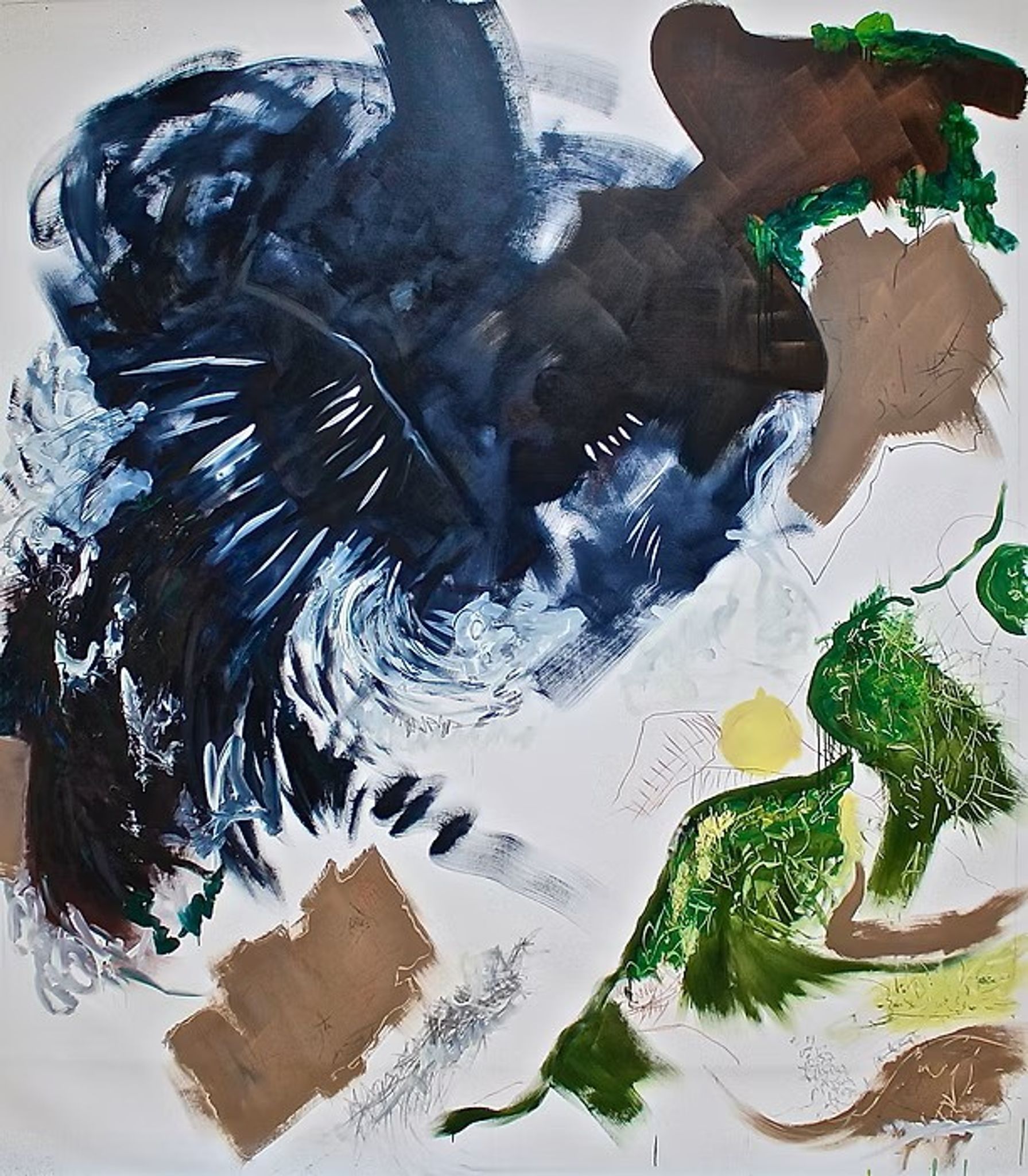

IN LOVING MEMORY OF Brian James Shields
Brian James
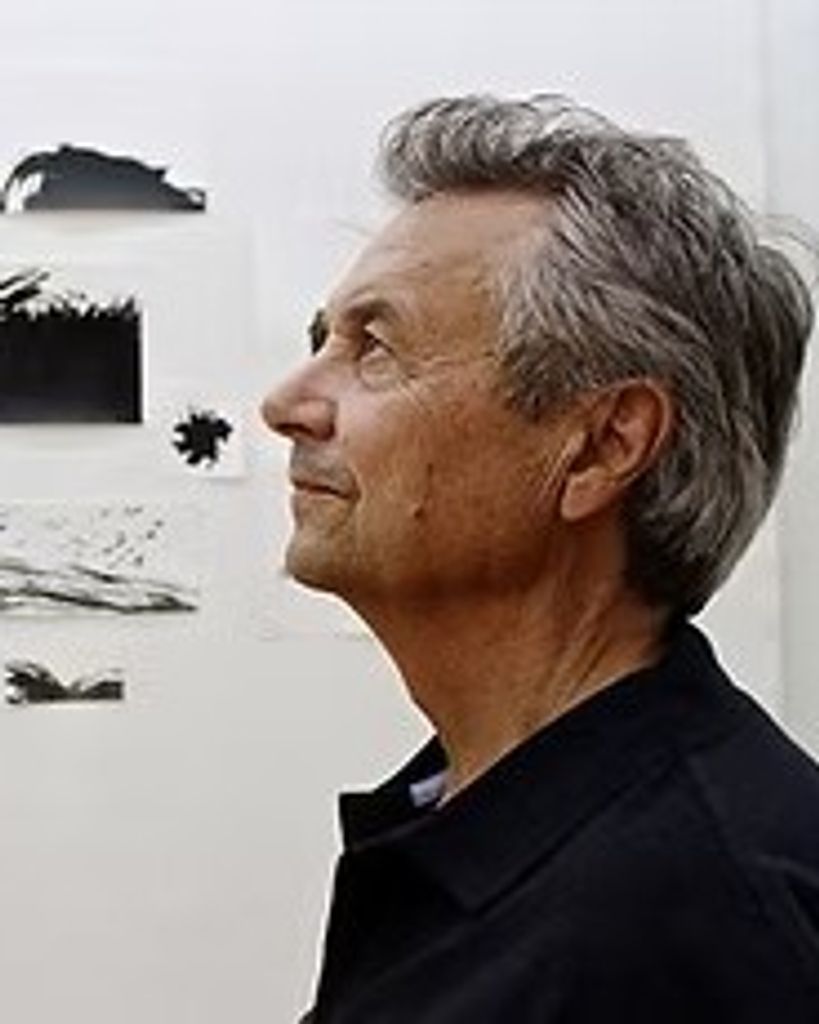
Shields
Jun 29, 1946 — Apr 17, 2026
Brian James Shields' Obituary
It is with deep sorrow that the friends and family of the artist, Brian James Shields, of Ranchos de Taos, announce his passing. Brian will be deeply missed and long remembered with gratitude for his delighted love of life, his indelible contributions to his community as an artist and activist, and for his profoundly kind and generous spirit.
Brian was born on June 27, 1946, in Barcelona, Spain. Brian’s mother was Maisie Alexander Johnson, who was of Catalan, German-Hungarian Jewish, and Scottish descent. Brian was blessed with three fathers, Tom Shields, a Scottish textile manufacturer based in Barcelona; Antonio Valls, a Catalan deep-sea diver and restaurant owner; and, crucial to his values, Denis Johnson, an American war hero and radio operator for the British SOE, who organized airdrops to the French Mountain Resistance, from the ground, during WWII.
Brian grew up on the Mediterranean coast of northern Spain, in a family of accomplished artists. One of his cousins is a professional theater actress in Madrid, and his aunt, uncle, and another cousin were ballerinas in Paris and danced at the Paris Opera. He was sent to British boarding school at the age of eight, speaking only Spanish and French. He claimed that art and sports, at which he excelled, saved his life. At the age of sixteen, he attended the American University in Paris, eventually emigrating to the U.S. where he earned a BA in art history, with minors in philosophy and studio arts from Hofstra University. He always said that his true education came from his daily visits to the Parisian museums, Jeu de Paume, L’Orangerie, and the Louvre, where admission was free to students and the galleries were never crowded. At Hofstra he began painting in oils, working with clay, and exploring black and white photography.
In 1968 he returned to Paris for a year to work as a lighting technician under the direction of Raymond Rouleau and Tania Balachova. He participated in the student uprisings in the spring of 1968, living behind barricades during the day and meeting with other artists at the Odeon Theater at night. There he absorbed the concept of “constant revolution,” the idea that in order to evolve, “questioning and changing” should be as much a part of life as breathing, a perspective that remained a vibrant force in his painting practice throughout his life.
In his early twenties, Brian taught art in Harlem, before moving to San Luis, Colorado, where he served as the art teacher for three years. Art supplies were unavailable, so he taught the students how to use found objects from nature to make art, while they taught him how to live off of the land. During those years he lived mostly from what he hunted, fished, gathered, and grew, while exploring the northern New Mexico wilderness by backcountry skiing and hiking into remote areas. He was eventually asked to leave his teaching position because he insisted on speaking Spanish with his students, as well as English.
For the fifteen years that followed, Brian was a certified wilderness guide, making his living taking individuals and groups backcountry skiing in winter and river rafting in summer. He designed the Amole Canyon Back Country Trail and signage he posted remains along the route today. With Nancy Laupheimber and the Los Angeles Philharmonic he conceived of the Classical River Journeys down the Green River in Utah. During this time, his art practice focused on photography and sketching with watercolors and ink.
By the late 1980’s he began to notice the growing environmental threats to wild places he loved and in response to the Molycorp Mine’s attempt to build a waste tailings pond next to the Rio Grande, Brian helped to found and became the visionary leader in 1988 of Amigos Bravos, a non-profit environmental organization, with a social justice conscience, for the protection of New Mexico’s waters.
With his grassroots political commitment in one hand and his art-making in another, he returned to New York City in 1989 to practice at the Art Students League, where he studied under Philip Sherrod and encountered his first Joan Mitchell painting, La Vie en Rose, at MOMA. Abstract Expressionism became a significant influence on his plein aire painting when he returned to Taos in 1992, eventually becoming the foundation of his art. Once home, he also became the first Projects Director at Amigos Bravos: Because Water Matters, co-directing with his eventual wife, Sawnie Morris. In 1996 he assumed responsibility for the growing organization as the Executive Director and led the organization for the following 23 years, during which time he devoted three days of each week to wilderness exploration and plein aire painting. He said, “Painting made it possible, psychologically, for me to sustain the environmental work, while the environmental work paid for the painting supplies.”
Among his many accomplishments while directing Amigos Bravos was leadership of a coalition (Communities for Clean Water) that successfully settled a Clean Water Act lawsuit against Los Alamos National Laboratory (LANL) and the US Department of Energy for 65 years of toxic radioactive discharges that threaten the Rio Grande, the health and cultural practices of nearby Pueblo Nations, and the drinking supply of Santa Fe. Amigos Bravos also became the fiscal agent and coordinator for the Coalition for the Valle Vidal, which successfully brought together over 400 businesses, local governments, Native Nations, and environmental organizations to permanently preserve, through an act of Congress, the 100,000 acre “Valley of Abundant Life” in northern New Mexico from coal-bed methane drilling (thus protecting the waters in two major upper watersheds). Under Brian’s leadership, Amigos Bravos was also a lead organization behind the creation of the New Mexico Mining Act Network, which was instrumental in gaining what was the largest financial assurance bond for cleanup of a hardrock mine in the US (the Chevron/Molycorp mine was forced to make an $800 million superfund-mandated cleanup with the aim to ultimately restore the “dead” Red River). Brian was deeply delighted by the success, in concert with Taos Pueblo and other groups, in reintroducing river otters to northern New Mexico. He left Amigos Bravos in February of 2015 to devote himself full-time to his painting practice.
During the year before his diagnosis of glioblastoma in July of 2019, his large-scale paintings appeared in seven pop-up shows in Taos, Denver, Los Angeles, and Barcelona, with a solo show reception at Michael Warren Contemporary in Denver. Prior to this, Brian had established an indoor studio for making large-scale paintings and attended Jeremy McDonnell’s art-critique seminars at UNM-Taos starting in 2012. Brian transitioned during that time to the art form that he later said had always been waiting for him: large-scale abstract expressionism. He began each day’s work by improvising on an electric keyboard and dancing.
About Brian’s art, poet and editor, William Olsen, commented in Lana Turner: Journal of Poetry & Art that “Someone must cherish the world minutely and passionately to have made these paintings.” While critic Ann Landi has said, “It is always hart-stopping to see someone working with so much confidence, in an idiom that many thought moribund, and on a truly grand scale.”
Brian exhibited and sold his paintings in numerous venues and galleries in the United States and internationally. Locally, his paintings were selected in recent years for the Taos Contemporary 2020 Exhibition at the Harwood Museum, as well as for the grand opening of the Wright Gallery in Taos, and for shows at 203 Fine Art, Maya Torres’ Studio 107-B, T.J. Mabry’s annual studio exhibition, and others. Prior to that, the Bareiss Gallery hosted Brian Shields: Unframed in 1999, a solo show of large abstract works in 2015, and a show with Hank Saxe and Dora Dillistone in 2017. Michael Warren Contemporary continues to represent Brian’s work in Denver, as does his wife, Sawnie Morris, in Taos. Brian continued to paint until the summer of 2023.
Brian is survived by his wife, the poet, Sawnie Morris, of Ranchos de Taos; his sister and brother-in-law, Tania and Nick Oppenheim of London, UK; his god-daughter and niece, Natasha Frankopan (Nick) of London, as well as nieces, Bettina Steele-Perkins (Jamie) and Serena Oppenheim, in addition to his grand-nieces and nephews, Tekla, Conrad, Bartle, and Honor Frankopan, and Felix and Issac Steele-Perkins, all of London. He is also survived by his beloved cousins, Jennifer Goube of Paris, Jeannine Mestre of Madrid and Sylvana Mestre of Barcelona, along with second cousins, Alexia Tauler (David Stone) and Gabriel Gorze, as well as first cousin Yvonne Casanova (Tito) of Barcelona and second cousins Sonia Casanovas (Gonzalo Comella), Ariana Casanovas (Jose Luis Wood), and Alejandro Casanovas (Andrea Soriano). Brian is survived and mourned by his cousin Catherine Deeley of Los Angeles, as well as his sisters-in-law, Charlton Traynor and Belle Morris (Martin Kozinzke), and nephew-in-law, Nick Traynor (Robyn Bendar) of Colorado––and many more extended family members and devoted colleagues and friends. He was proceeded in death by his first wife, Marilyn Grimes, also of Taos, as well as by his cousin-by-marriage, Chicho Tauler, of Barcelona and brother-in-law, Dean Traynor of Bastrop, Texas.
Brian James Shields died in the same extraordinary way that he lived. Courageous. Completely lucid. A phenomenon.
~
In lieu of flowers, donations may be made to:
Amigos Bravos: Because Water Matters:
https://www.amigosbravos.org
Taos Thrive Through Art, Harwood Museum: https://harwoodmuseum.org/thrive-through-art/
Brian James Shields' Guestbook
Visits: 1699
This site is protected by reCAPTCHA and the
Google Privacy Policy and Terms of Service apply.
Service map data © OpenStreetMap contributors